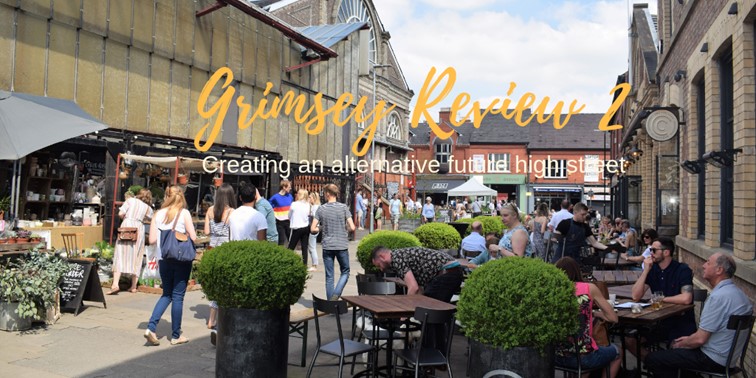
In publishing his second review of an alternative future for the high street this summer, Bill Grimsey’s gift to Government is a well-worked plan. The frustration is that so was his team’s first review in 2013!
The issue in taking forward Grimsey’s gift to Government, is that he and his team are assuming that central Government cares and can concentrate on town and city centre issues. Not everyone is convinced they will. Instead some opinion-leaders are looking for more locally-led solutions alongside limited legislative change on planning and business rates by Government.
Slow progress on business rates
As Revo, the organisation representing shopping centres and other retail property commented in its response, “We agree with many, if not all, of Bill’s recommendations but in truth it is time for less talk and more action. In 2013 we led a Government supported Taskforce on the future of high streets, aptly named Beyond Retail, and the challenges were the same then as they are now. The only difference is, as a result of successive Governments kicking the can down the road, the problems facing many town centres and high streets have become more acute.” Revo especially back the need for Business Rates reform.
Grimsey rightly parks key issues around planning, property and business rates firmly at central Government’s door. Here Government can reform national policy and legislate as required
Importance of local leadership
The rest of the document is essentially pitched at local authorities where local leaders are better placed to care, concentrate and respond to issues on their doorstep. In deed many are actively involved in taking forward locally-based approaches to revitalising town centres as Grimsey recognises in acknowledging the value of recognised in the Local Government Association’s recent revitalising town centres handbook.
As the LGA commented in response to Grimsey Review 2: “Many councils throughout the country are already leading the way in transforming the future potential of their town centres in the face of unprecedented changes in shopping habits and the retail landscape. We are pleased that the report backs our calls for councils to have more powers and flexibility, particularly in relation to planning, to help shape and deliver vibrant town centres.”
Grimsey’s gifts to local government
So what then might be Grimsey’s gift to local government?
Leadership: Central to the proposals is cohesive local leadership through what Grimsey refers to as a Town Centre Commission with a remit to build a 20-year vision/strategy for their unique place. Such vision needs to be underpinned by a comprehensive business/place plan.
Monitoring: Common key performance indicators should be introduced to measure the economic and public health of each town using a “data dashboard” to provide independent, objective and current data on performance.
Multi-purpose: Like many others before, Grimsey recognises a need for multi-purpose town centres re-fashioned as community hubs, including housing, health and leisure, entertainment, education, arts, business space and some shops. Libraries public spaces and other community facilities should be at the heart of each community as digital and health hubs that embrace smart technology.
Animating: Equally, local authorities should establish events teams to manage a comprehensive programme of activities that complement the Town Centre Commission Plan by driving footfall to local high streets.
Design: Local authorities should appoint high quality design teams to create and enhance spaces for civic and social use. Design should celebrate the historic character and local identity with high quality streets and public realm.
Development: Planning, and in part guidance and consents should ensure that developments fit within the criteria set by the Town Centre Commission plan. This should include reviewing the future use and relevance of out of town shopping parks, while applying a Town Centre First policy and calling for no further out of town development.
Parking: Grimsey recognises the importance of a turn-over of parking spaces and offers some very specific guidance that goes a little against local autonomy. This calls for a nominal maximum charge (£1) for the first two hours in town centres, while introducing 30 minutes on-street free parking.
BIDS: Looking at Business Improvement Districts as another aspect of local leadership, the new Grimsey Reviews calls for more scrutiny in smaller towns where community, service and business functions perhaps overlap more. This includes the possibility of replacing them with Community Improvement Districts (CIDs) as a way of embracing all the stakeholders, occupiers, owners and service providers.
Funding: Limited thinking on funding includes the call that local section 106 income or any planning gains should be used to support the delivery of the Town Centre Commission Plan.
The next five years
Much of what the new Grimsey Review says about creating alternative futures for high streets and town centres, resonates with the thinking from local government articulated in the revitalising town centres handbook. It calls for joined-up and strategic thinking that brings together stakeholders and tackles a raft of related issues. Central Government has a supportive, legislative role especially around business rates reform. Grimsey’s second gift to change places, however, lies largely within the guidance it offers to local government leadership. Local authorities, businesses and other local stakeholders need to act decisively and not wait to see whether Westminster fails to focus and follow-through over another five years.