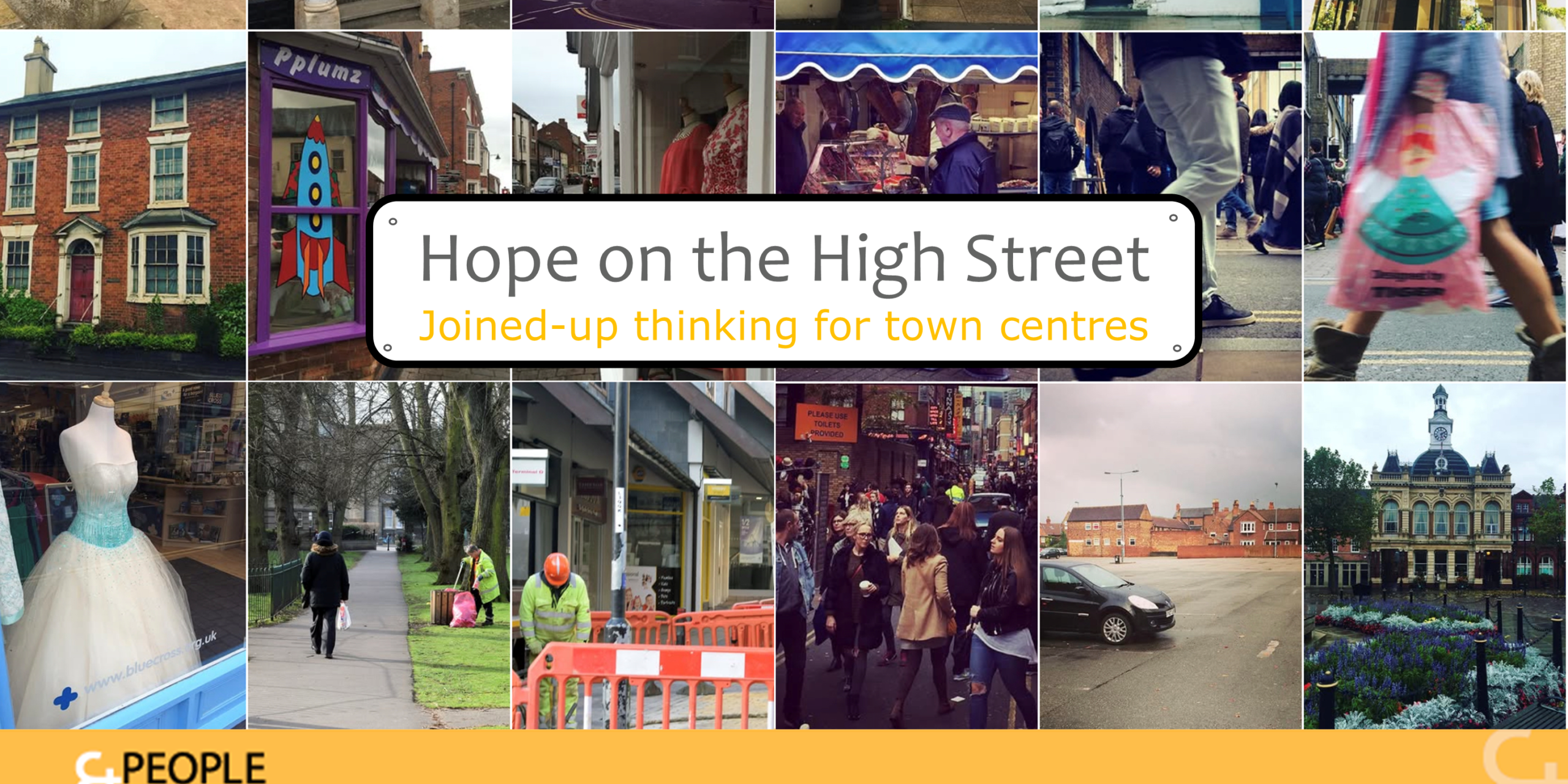
The ‘Hope on the High Street’ report published in October 2026 by Government, is a good discussion document…I like its focus on six pillars…and the idea that there are different types of neighbourhood, town or city centres. Is it a strategy for bringing about change, though? And is it even solely about High Streets?
Six pillars supporting success
The Ministerial foreword states that “the job of this government is to support local leaders to build the high street their community wants.” The following six pillars are identified as components of success:
- Active leadership and management (reasons to have confidence)
- Strong businesses, anchors and amenities (reasons to visit)
- Vibrant culture, leisure and entertainment (reasons to get together)
- Easy access and connectivity (reasons to explore)
- Safe, clean and welcoming (reasons to return)
- A place to call home (reasons to move in).
All valid thinking that illustrates the need for a multifaceted approach to revitalisation. The compendium of existing and potential policies in the appendices aside, I do not though see this document’s route to joined-up and effective delivery.
Discussing definitions
And who recognises a ‘High Street’ as a “cluster of more that 50 retail-classified addresses” that appears to include out-of-town shopping centres? Where is the role of vibrant culture, connectivity and a place to call home if we are looking at a retail-led classification? A hobbyhorse of mine, though aren’t we talking about neighbourhood, town or city centres at the heart of our communities?
This document includes a very simple classification of different types of laces and High Streets within them, which again suggests a wider focus on neighbourhood, town and city centres serving their communities and catchments.
Different types of places
- City centres (and regional centres): Major employment, shopping, culture, services and transport hubs. Attract people from across the region and beyond.
- Town centres: Wide range of shops, services, leisure and community facilities. Serve the town and surrounding area.
- District centres: Smaller centres with a mix of shops and services, often serving several neighbourhoods.
- Neighbourhood centres: Local convenience shopping and key services for nearby residents.
- High streets (within other centres): Named streets with a high concentration of shops, services and other uses. Can sit within city, town, district or neighbourhood centres.
- Out-of-town retail: Large-format retail, often focused on comparison goods and convenience. Usually accessed by car and typically does not provide the same mix of civic, social and public services.
A high street typology
Within each type of place, high streets can function in different ways depending on how demand is generated and who they serve.
- Office Hubs (15%)
- Major shopping destinations (15%)
- Tourism destinations (13%)
- Everyday high streets (57%)
Locally-led action plans backed by national policy
The document rightly suggests that local partners “who understand the ecosystem of their local high street must take the lead.” It explains how a partnership approach is necessary because such leadership does not rest with one institution or office holder. It says it is the role and responsibility of a partnership local and regional governments, public bodies, communities, businesses and citizens that should work together to become stewards of their high streets.
It is recognised that effective national support needs to include providing information and guidance, helping places to diagnose their challenges, build strong partnerships and turn plans into delivery. It says that while success is ultimately built locally, Government’s role should be twofold: to devolve power and decision-making wherever possible, and to act decisively where only national government can remove barriers and create the conditions for success.
What to expect next
A summing-up page to the ‘strategy’ suggests that the Government does not see this report as a document that shapes delivery on its own. It indicates that as a report it “sets a clear direction of travel for high streets, but it is not the end of our work.”
It points to the importance says of Devolution in saying that as a Government it will use the forthcoming ‘Rewiring the State Delivery Plan’ and future fiscal events to consider where additional powers, funding or reforms are needed to help places deliver lasting change. It also outlines how the new ‘Place Regeneration Taskforce’, that is part of the Office for the Prime Minister and the Cabinet, will continue to champion an ambitious approach to High Street regeneration as part of its work.
Monitoring High Street performance and perceptions
This final section paints a picture of the Government’s role as monitor and observer. It is explained that the Ministry of Housing, Communities and Local Government, will monitor a range of indicators, including persistent vacancy and public perceptions of local places and high streets, to “understand whether the strategy is supporting healthier and more resilient high streets” and will work with partners to improve the evidence base, definitions, and data available on the health and performance of high streets over time, including adding high street performance and/or perception questions to the community engagement survey.
A work in progress
All of of this analysis here, suggests to me that we are right to interpret this report as an interim ‘strategy’ or discussion paper. And it is okay that this is a work in progress! It suggests that central Government pulls some of the levers across a variety of pillars essential for supporting sucess. It also rightly recognises that success in places will ultimately be led by local people coming together to lead muti-disciplinary and multi-layered partnerships that create and deliver locally-relevant action plans. It is honestly recognised within its concluding remarks, that the report sets a direction of travel that will require devolved powers, funding or reforms to help places deliver lasting change.
Further reading
You can download a copy of Hope on the High Street and decide for yourself if it is a strategy or a thought-provoking discussion document.
You can also read and seek to use the ‘revitalising town centres toolkit‘ prepared by People & Places for the Local Government Association that has long recognised the importance of active leadership and management along with the multipurpose functions of neighbourhood, town and city centres.
In the spirit of ‘hope’ on the High Street, at People & Places we have recently pulled together guidance and inspirational case studies for ‘getting more smiling faces in places‘.