A clear vision and masterplan is important as you embark on a journey to revitalise your town centre or community. It’s important to be clear about where you want to go. Understanding where you are and where you want to be, making best use of the physical assets of a place, energising people and bringing them together with a common focus is all equally important.
Developing a ‘vision’ and a ‘plan’ for a place can work on all levels – a building, street, square, large area of land, town centre or for the wider settlement. It is also important to realise that sometimes having fuzzy boundaries is good as places don’t stop at the city limits but relate to other places whether this be as travel, employment, education or other aspects that connect places.
Successful visioning and plan making can benefit from external facilitation that provides objective input and helps bring different partners together. This is something which we have wide experience of and are able to undertake alongside key input from local authority departments, business and community groups.
A vision for place
When a town needs a vision it is sometimes because it lacks one or bith as ‘people & place’ there needs tobe a reminder about its function, identity and future opportunities. The need to reimagine town centres is important as people are “popping out to the shops” as frequrently and are using towns as places to do business, spend social time in and engage in cultural activity. A vision isn’t therefore just a physical visualisation of where a place wants to be, it also needs to consider its social make-up, how it can unlock economic and social opportunity, and local service delivery for a diverse and maturing population. It also needs to reflect on the distinct environmental qualities of the place that provides its heritage, modern day identity and future opportunities.
Importantly, a vision needs to relate closely to its local community so people understand the current health of their town or place, understand choices and how cultural development and physical regeneration can help better meet their future needs and how it can benefit them.
A vision can also work alongside place branding and destination management, acting as messenger for economic development, inward investment and tourism to create an open door for companies and investors that see the potential and want to locate in the city or town and be part of the local business community.
The choice of anguage is important so ensure that a stated vision connects with strategic organisations and local residents, shows a sensible logic to proposed actions and sets out some ambition. Visions by their nature need to be forward looking and about horizons. They also need to show through their accompanying plans that there are steps to get to the end goals, so that they build confidence and show visible benefits along the way.
Involving people
Visions and related plans will only succeed if people have been involved and have ‘ownership’. Processes of engagement and involvement serve as a continuum that is critical to people understanding, responding and helping co-deliver future plans and action. The importance of communication skills is often over-looked as a way of engaging people in understanding a place, co-creating solutions and maintaining a focus on coordinated delivery.
Community participation is essential in mapping the physical and social capital and challenges of a town, often revealing stories and personality of a place that are not written down but told by people. Local people also help us understand how people use their towns and why they do not They will also tell you what will attract them back into a place as well as wanting to get involved through a community organisation or as a local resident.
It is equally important to involve people that have direct influences such as large and small businesses/employers, landlords, public sector bodies, educational institutions, transport providers -amongst others. Finally make sure young people have a chance to get involved as after all they will be adults, perhaps parents, when they start to see the plan come to fruition!
Maintaining the energy, trust and relationship beyond a plan-making process is also important as people want to see things happen and be reminded that they were a part of the initial conversation that led to action. Remember managing change in towns and communities takes time and how you communicate progress is key to showing the value of your town’s vision and plan, and keeping people interested.
A vision for people & place in Selby
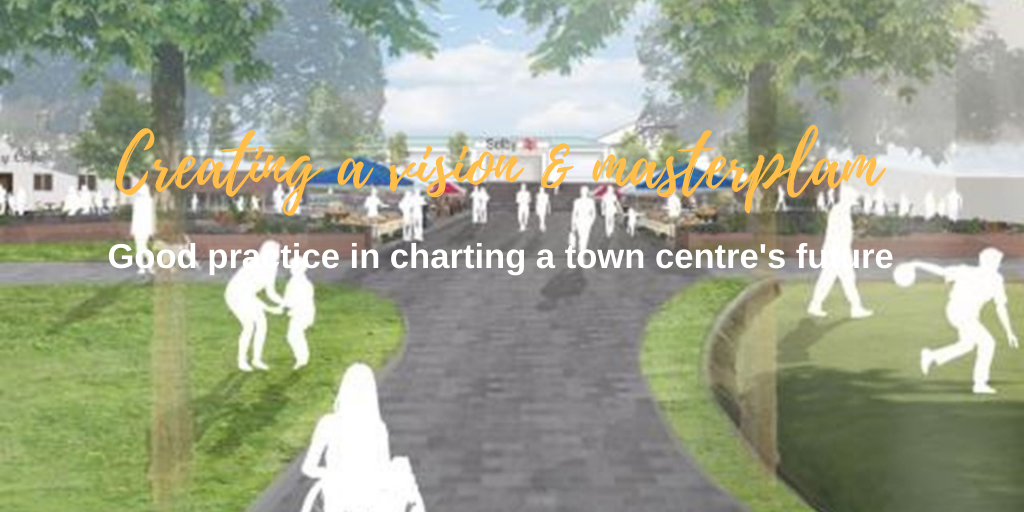
In developing plans for the recovery and revitalisation of Selby, for example, involving local people and businesses was critical to the success of future plans. This involved consulting customers and businesses through surveys of their perceptions and priorities for the town and then engaging key stakeholder groups in addressing identified issues. At People & Places, we develop the vision for a town as an iterative processes built-up from an understanding of a place and its people.
In Selby, four broad sets of issues were identified from research and engagement, and a summary themes created for each:
- Theme 1 (physically connected): Growth and access underpinning enterprise & services.
- Theme 2 (culturally connected): Enhancing an authentic heritage, culture, environment and vibrant economy.
- Theme 3 (digitally connected): Supporting business and digital development
- Theme 4 (connected activity): Partnership development for driving change through coordinated delivery and clear communications
The overall vision statement for Selby is a summation of these four separate themes and objectives for physical, cultural, digital and organisational connectivity and is articulated as “a 21st Century connected, accessible & progressive town with a lively, active historic centre surrounded by high quality urban neighbourhoods & with diverse, thriving businesses.”
A doing plan
When looking for a focused approach for delivering change in town centres, masterplans have long been favoured as a way of they analysing and presenting an understanding of place, and provide a structured approach to creating a clear and consistent framework for development.
Master plan-led approaches should tackle issues through a process founded on co-ordination, sharing ideas and collaboration across professional disciplines that includes matching assets with potential users. With a focus on physical place-led solutions, delivery of masterplans needs tomrie to the challenge of adapting to changing behavior of users and how new uses can stimulate additional activity that makes towns into pleasurable places to live, work and enjoy. The knitting together of masterplans with landuse planning, economic development and destination management to create an integrated approach can be challenging, especially where local capacity for ongoing deliver is limited.
At People & Places, from working across many communities, we have come to refine our approach to what we would prefer to describe as an action planning process that is more tactical and seeks to co-create change through building local partnershios and capacity. Our broad methodology is set-out in the revitalising town centres toolkit that we prepared as national guidance for the Local Government Association. This outlines an evidenced-based approach for addressing the ‘what’ and ‘how’ of town centre revitalisation. The ‘what’ includes the ‘hard’ (physical change) and the soft (bringing places to life) sides of revitalisation. The ‘how’ focuses on partnership working and putting processes in place to make things happen.
In shaping physical change, we are moving away from masterplanning to ensure there is more a focus on ‘doing’ through more localised work focused on enhancing public spaces and streetscape, whilst set-in a context of strategic and transport planning. As set-out in out think piece on transforming public spaces, we propose that there should be four elements to a more tactical placemaking approach to transforming public spaces as part of the wider revitalisation of our town and city centres:
- Stakeholder engagement and pride in place
- Use of space and movement around town
- Quality of public spaces
- Deliverable and manageable
Our guiding light in this, is to try and bring local expectations and experiences of transforming public spaces, closer together.
Key pointers
Some of the main tips when considering a vision or plan for your place for town centre include:
- Understand why you need a vision and a plan and whether it has a specific focus
- Identify who needs to be involved, how to communicate with your community and find champions that will promote the opportunity
- Find ways of understanding your place or town centre and not just through physical analysis
- Look at what types of activity can be unlocked through physical change or softer animation
- Have a timeline that allows for ambition and making progress on small wins and longer-term goals
- Think of your audience – your local community and also people that want to invest – what are you unique selling points?
- Build in monitoring and establish outcomes that are realistic and show both an holistic and issue-focused approach
Learn more
Contact us through our Keep in Touch page if you have experiences from developing and delivering town centre plans that you want to share, or you need a nudge in the right direction for your town and do not know where to start or go next. Or simply email services@people-places.net
The People & Places Partnership are creators of the Local Government Association’s national guidance for local leaders on revitalising town centres toolkit.